Behind the Lens: A Renaissance-Style Still Life
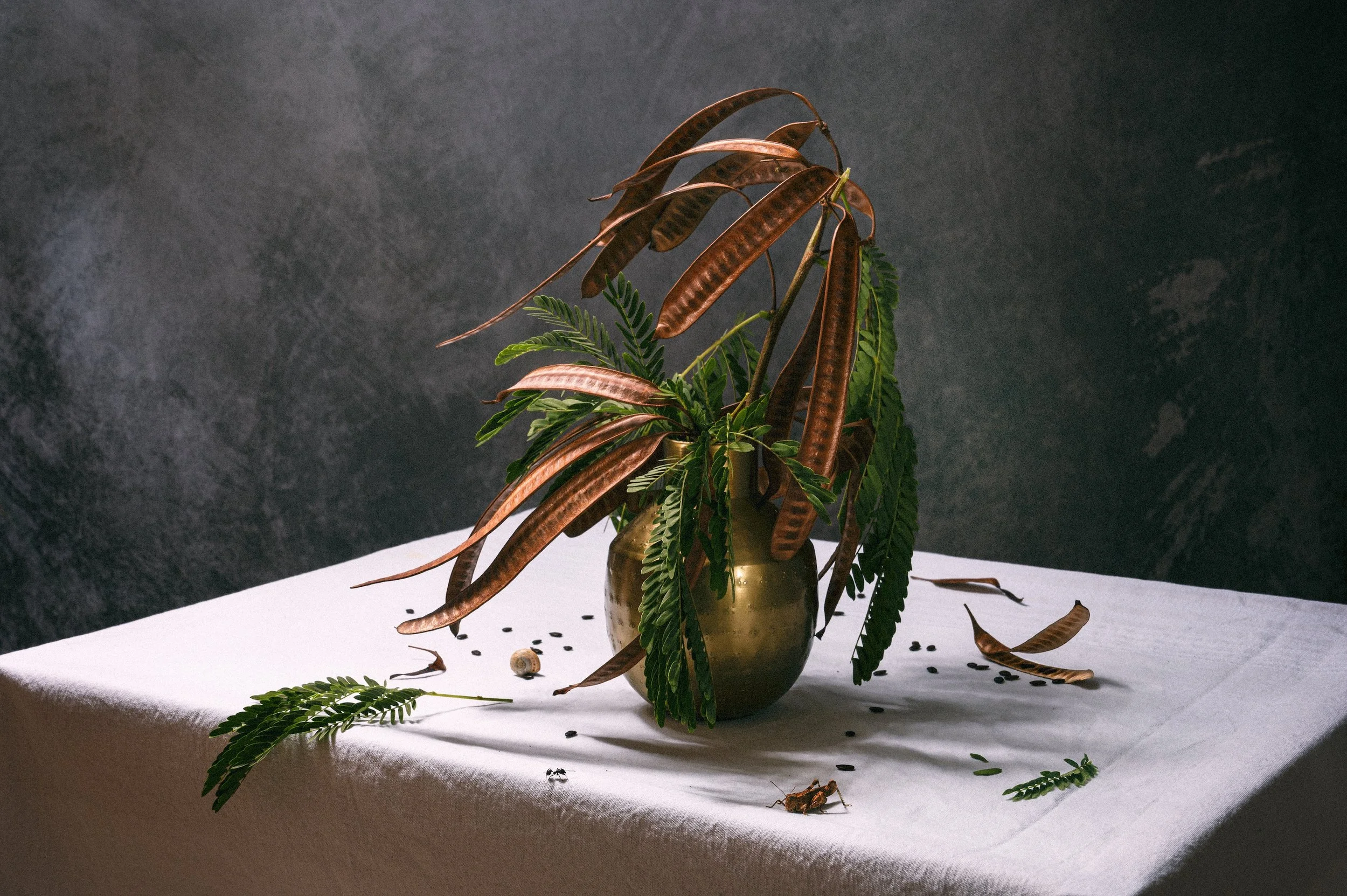
I set up the studio the day before: tabletop (child’s table with an old table cloth), vase (EUR 2 in a charity shop), and background all in place. I also went for a walk to check which plant would be the best.
In the morning, I went out to collect the plants — and picked up an ant on the road. The wind flipped my basked over and the ant escaped! I had to find a new one. A friend coming to visit (and who helped with the animal coordination after all) brought me a grass-hopper who she saved from a swimming pool. A snail joined too, though he had no interest in moving around (empty shell).
I built the shot in stages: composition first, then light, then swapped in placeholders for the grasshopper and ant. The grasshopper was a good sport, sitting still — except whenever I tried to nudge him into a different pose, he'd immediately jumped... The ant, on the other hand, never stopped walking, and remained completely unimpressed by the tiny drop of honey I offered him. We ended up ferrying him back into position on a spoon, again and again.
The actual shooting took just 5–10 minutes. Getting there — from setup to cleanup — took at least a full day of work, probably more.
What I learned:
Grasshoppers are quite chill, and don't jump too often
Not all ants appreciate a drop of honey
Plants dry out and go soft surprisingly fast
All animals were unharmed and released back into nature after the shoot.